Art of Germany (2010)
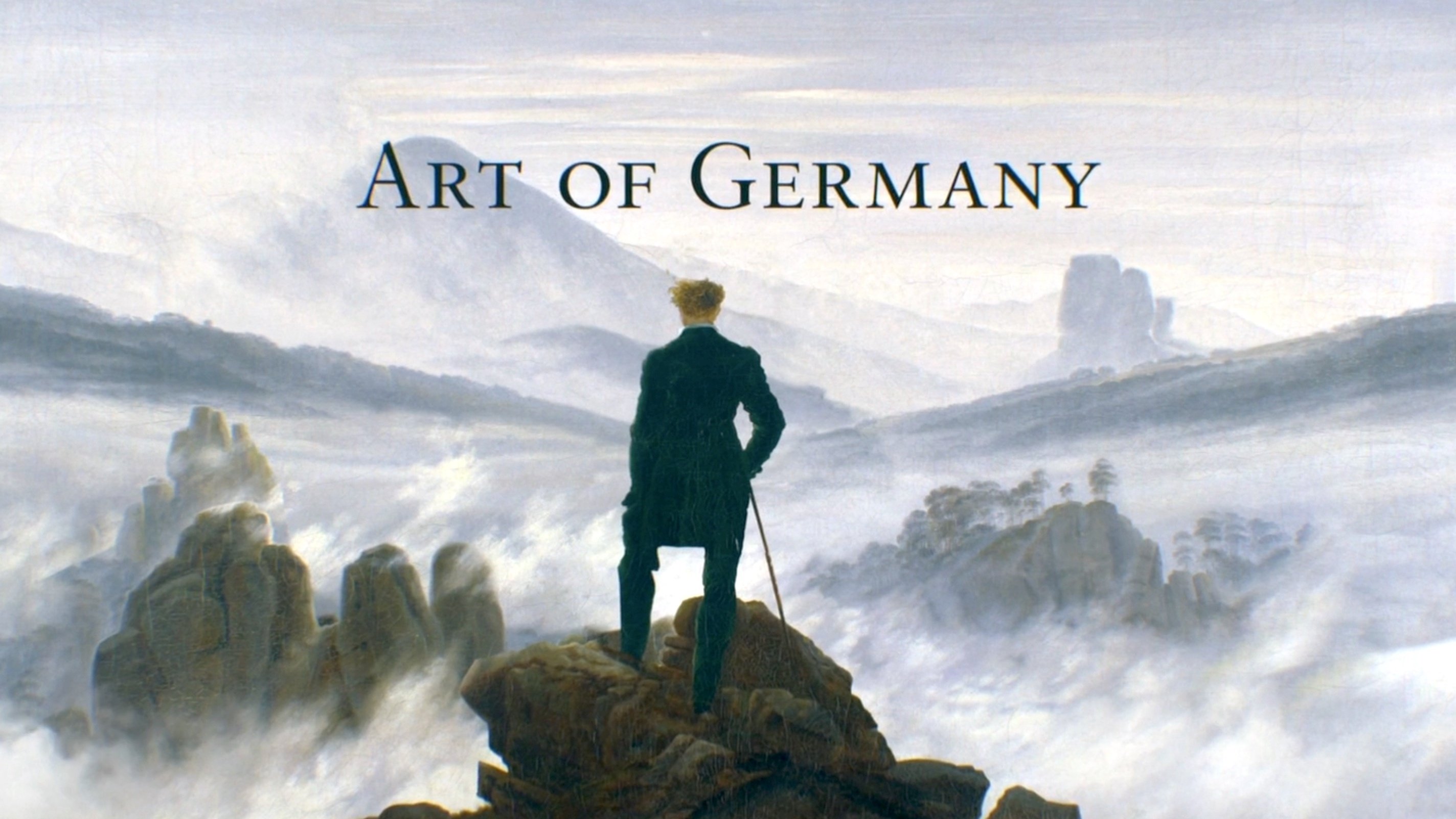
In an absorbing study, Andrew Graham-Dixon tells the story of a national art that conveys passion, precision, hope and renewal. He juxtaposes escapism with control and a deep affinity with nature against love for the machine. The fascinating story takes us from the towering cathedral of Cologne, the woodcuts of Albrecht Dürer and paintings of Grünewald to the gothic fairytale Neuschwanstein Castle, the Baltic landscapes of Caspar David Friedrich and the industrialisation lent expression of Adolph Menzel and Käthe Kollwitz. As the series progresses, it presents a rare focus on the cultural impact of Hitler's obsession with visual art, reveals how art became an arena for the Cold War and examines the redemptive work of the "visionary" Joseph Beuys – the most influential artist of modern times.
Movie Info
In an absorbing study, Andrew Graham-Dixon tells the story of a national art that conveys passion, precision, hope and renewal. He juxtaposes escapism with control and a deep affinity with nature against love for the machine. The fascinating story takes us from the towering cathedral of Cologne, the woodcuts of Albrecht Dürer and paintings of Grünewald to the gothic fairytale Neuschwanstein Castle, the Baltic landscapes of Caspar David Friedrich and the industrialisation lent expression of Adolph Menzel and Käthe Kollwitz. As the series progresses, it presents a rare focus on the cultural impact of Hitler's obsession with visual art, reveals how art became an arena for the Cold War and examines the redemptive work of the "visionary" Joseph Beuys – the most influential artist of modern times.
Similar Shows

Trump & us – Wie er unsere Welt verändert
2026

100 Years Ago: From Berlin to the World
2025

The Ideal Exhibition with Hervé Tullet
2018
Lily Cole's Art Matters
2013

Art of America
2011
Art of China
2014

Seven Ages of Britain
2010

The Sea Rescuers
2025

Lost Women Art
2021

PhantasIA
2025

Buildings for Society
2026
The Beauty of Anatomy
2014
The Legends of Paris: A Tale of the 19th Century Artistic Scene
2024

Sensationalists: The Bad Girls and Boys of British Art
2022
This is art
2017
The Devil Next Door
2019

Terra X - Deutschland von oben
2010

Living Art
2020
À tout hasard
2016
Vu par hasard
2011