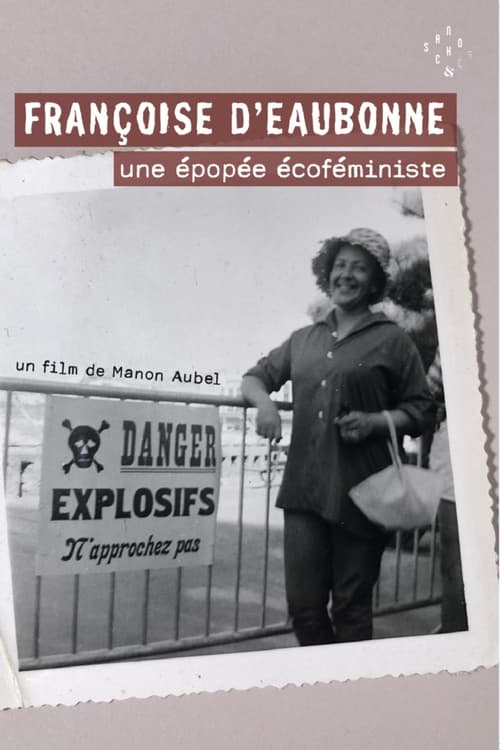
Françoise d'Eaubonne: une épopée écoféministe (2023)
In the 1970s, Françoise d'Eaubonne stood out in the French intellectual landscape. At 50, she has already won several literary prizes and published around forty novels and essays, but is resuming her militant fight with renewed vigor. She is the first to define ecofeminism, denouncing the common oppression of women and the planet as a consequence of patriarchy. She participated in the actions of the MLF (Women's Liberation Movement), in the creation of the FHAR (Homosexual Revolutionary Action Front) and theorized counter-violence, going so far as to sabotage the construction site of the Fessenheim nuclear power plant. This film presents unpublished documents for the first time. Drawing freely from the manuscripts and photographic archives that she bequeathed to the Memory Institute for Contemporary Publishing, her relatives and researchers, historians and publishers comment on the resonance of her feminist and ecological heritage.
Movie Info
In the 1970s, Françoise d'Eaubonne stood out in the French intellectual landscape. At 50, she has already won several literary prizes and published around forty novels and essays, but is resuming her militant fight with renewed vigor. She is the first to define ecofeminism, denouncing the common oppression of women and the planet as a consequence of patriarchy. She participated in the actions of the MLF (Women's Liberation Movement), in the creation of the FHAR (Homosexual Revolutionary Action Front) and theorized counter-violence, going so far as to sabotage the construction site of the Fessenheim nuclear power plant. This film presents unpublished documents for the first time. Drawing freely from the manuscripts and photographic archives that she bequeathed to the Memory Institute for Contemporary Publishing, her relatives and researchers, historians and publishers comment on the resonance of her feminist and ecological heritage.
Similar Movies

M: Toru Muranishi - Wild Passionate Days
2019

Bombshell: The Hedy Lamarr Story
2018

Poly Styrene: I Am a Cliché
2021
Becoming Cary Grant
2017
Fort Saganne
1984

Pride & Attitude
2025
AVA
Entre nos mains (In our hands)
2024

Jane by Charlotte
2022
She's Beautiful When She's Angry
2014
Balavoine, enquête sur un destin tragique
2022

Piaf intime
2013

She's Nobody's Baby: American Women in the 20th Century
1981
Where Have All the Lesbians Gone?
2000

Portrait of a Clown
2019
Herculaneum
1951

Beside Bowie - The Mick Ronson Story
2017

Spielberg
2017

Play Your Gender
2017

Virtuoso: The Olga Samaroff Story
2009